Macros & Meals
A macro tracker that works out the grams for your next meal so you hit today's targets.
- Part no.
- A93-08
- Status
- beta
- Platform
- iOS
- Year
- 2026
- Stack
- SwiftSwiftUISwiftDataVision OCRHealthKitClaude Haiku
Logging food tells you what went wrong after you've eaten. It doesn't tell you how much rice to put on the plate now.
Turn tracking into planning. Pick the foods you want, lock what's fixed, and the solver portions the rest to land on what's left of today's macros.
Subscription, ≈ €3.99/mo, or a lifetime unlock.
- Downloads (assumption)5,000
- ×Download → paid5%
- =Paying users250
- ×Net revenue per user≈ €30/yr
- =Year-one revenue≈ €7,500
- −Label scans with Claude Haiku≈ $0.001 each
- Backend
- none
- Food database (Open Food Facts)
- free, with attribution
- Label structuring (optional)
- fractions of a cent
The maths runs on the phone, and barcode lookups hit an open database. Even heavy users cost less than a cent a day. The competition (MyFitnessPal, MacroFactor) is the constraint, not the cost.
Cheap to run. Planning the meal before you eat it, not just logging it after, is the thing that sets it apart.
- 01TargetsDaily macros from your profile and weekly check-ins.
- 02RemainingWhat’s left today after the meals you’ve logged.
- 03Pick & lockChoose foods and lock any fixed portions.
- 04SolvePortionSolver rebalances the unlocked foods to hit what’s left.
- 05LogOne tap to log it, with barcode and label-OCR input.
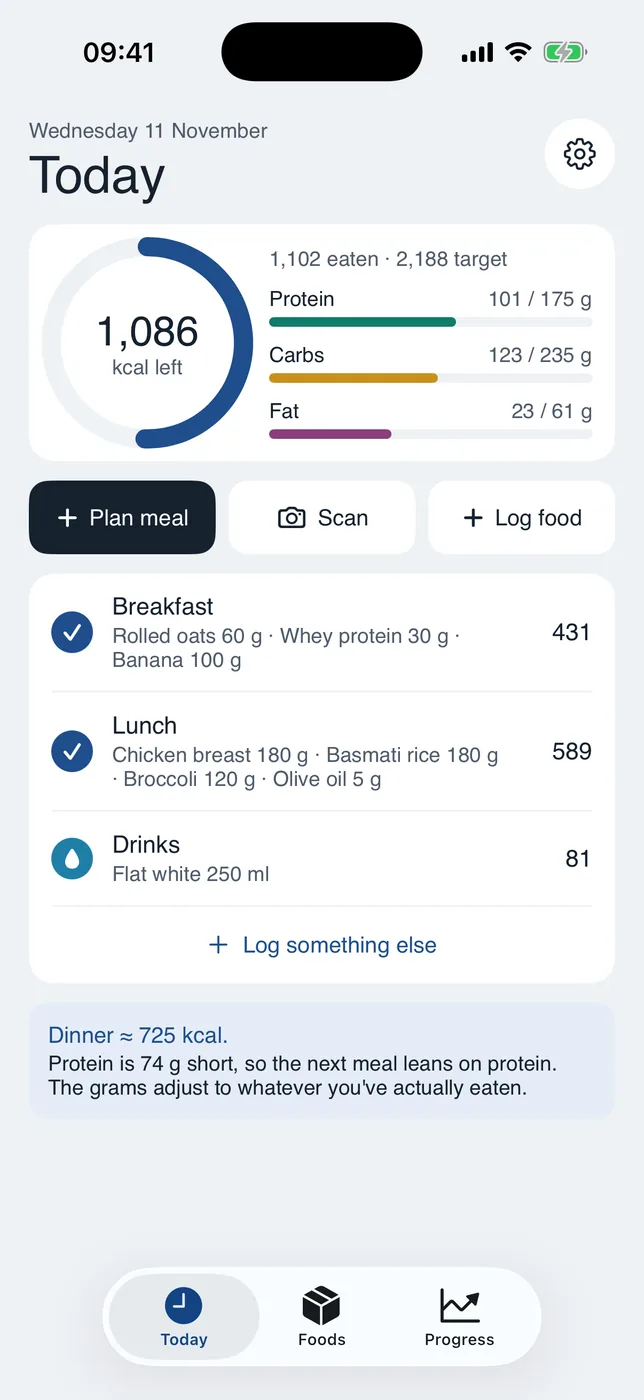
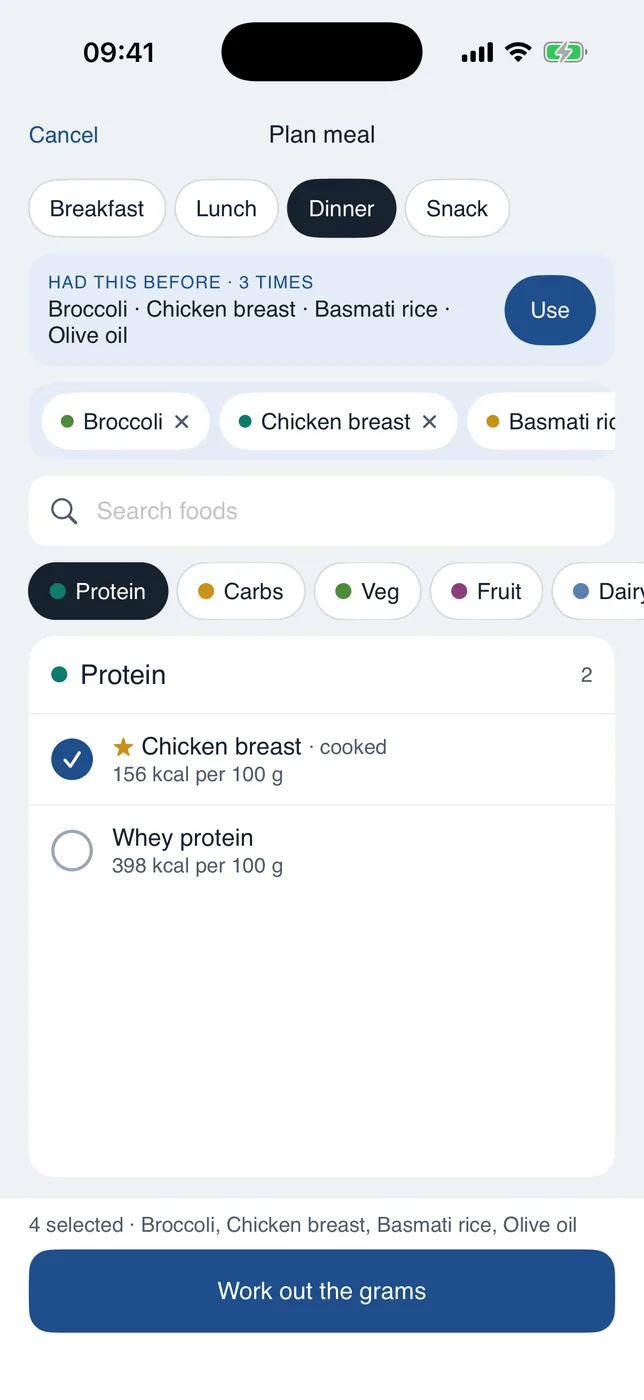
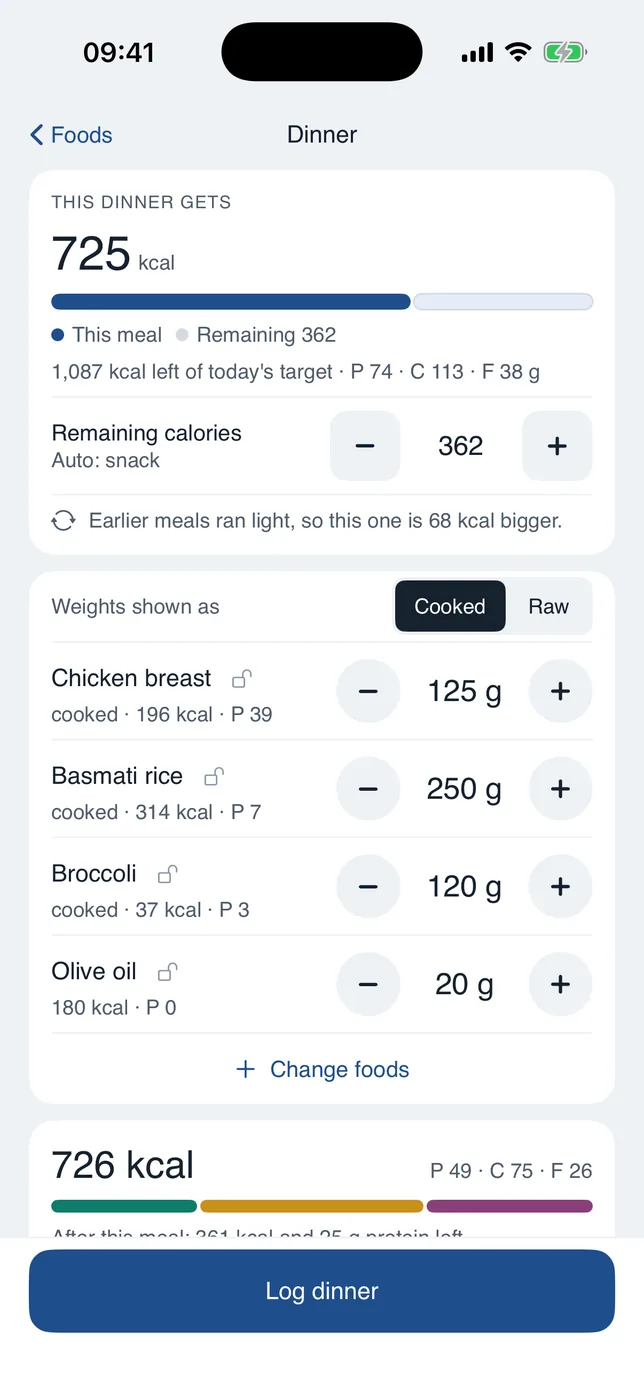
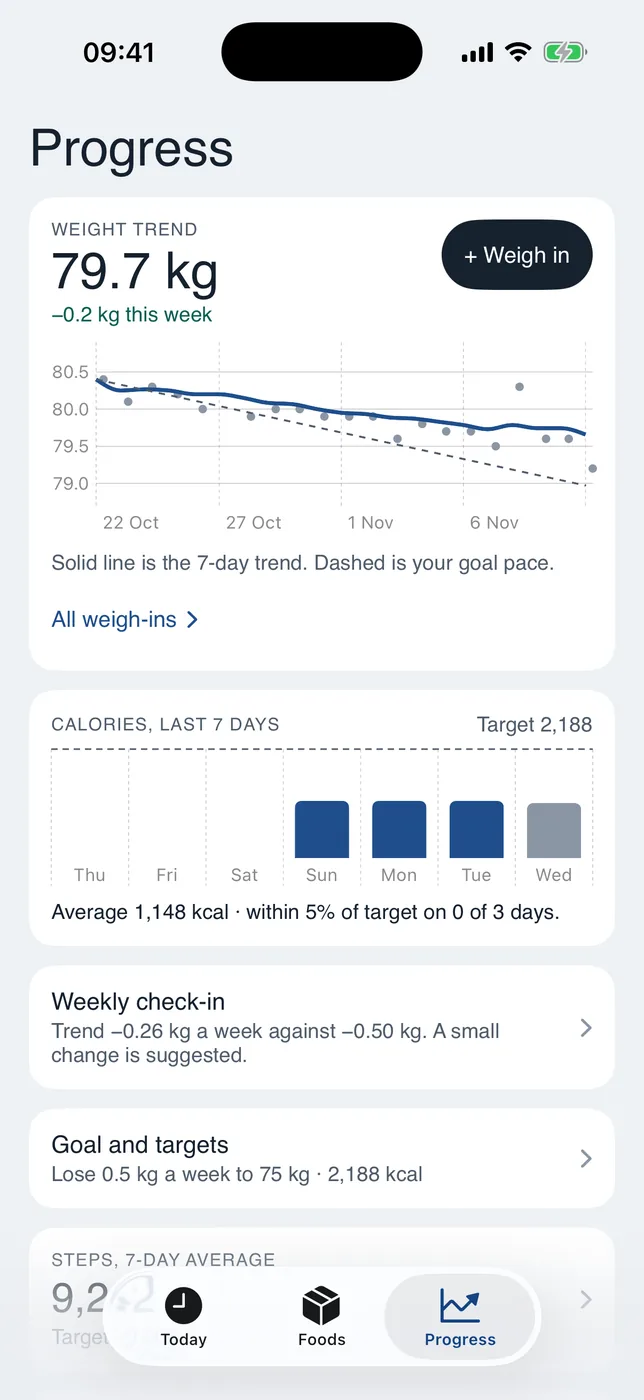
Labels read on the phone
The Vision framework reads nutrition labels on device. Claude Haiku optionally structures messy results, using a key kept in the Keychain.
Maths as a package
NutritionCore holds PortionSolver, Energy, Budget, WeightTrend and LabelTextParser, all unit tested and kept apart from the UI.
Spec-first
Product spec, algorithms with worked examples, data model and milestones were all written before the first Swift file.